Oily Purple-Engine
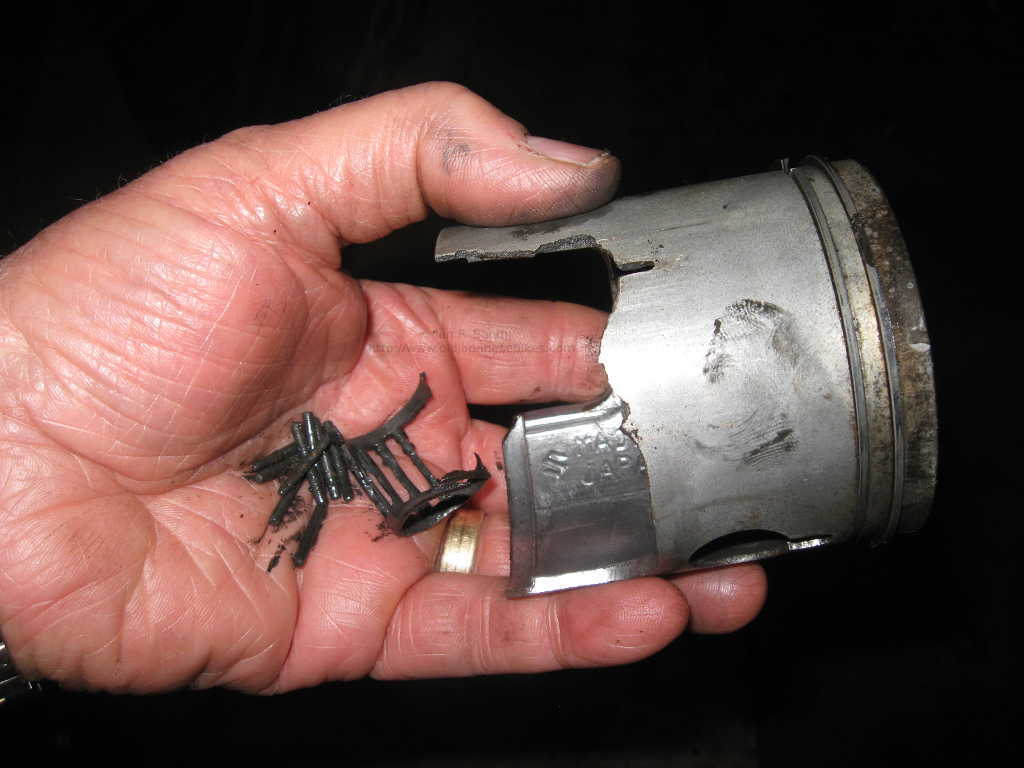
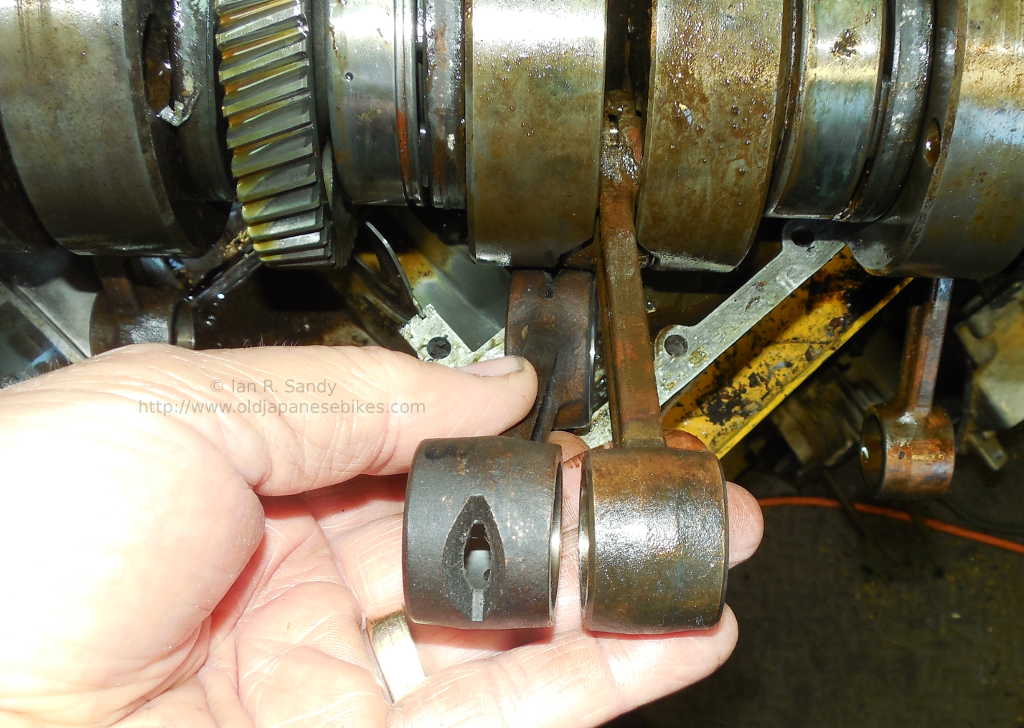
Always of interest to me at least, is to know why a bike was parked for an extended rest in whichever shed/garage it happens to have been found. While disassembling the assortment of engines I had to work with, two had a common failure mode - the left piston skirt had separated from the rest of the piston and caused loads of havoc elsewhere. Interestingly, in all three 'J' engines, the gudgeon pins were all blued to various degrees indicating over heating, lack of lubrication, or possibly both. The older style of con rod lacks a slot for lubrication in the small end - this was changed at engine 38060. In the photo below to the right, the old style is on the right and the new one on the left (just click to see a larger version).
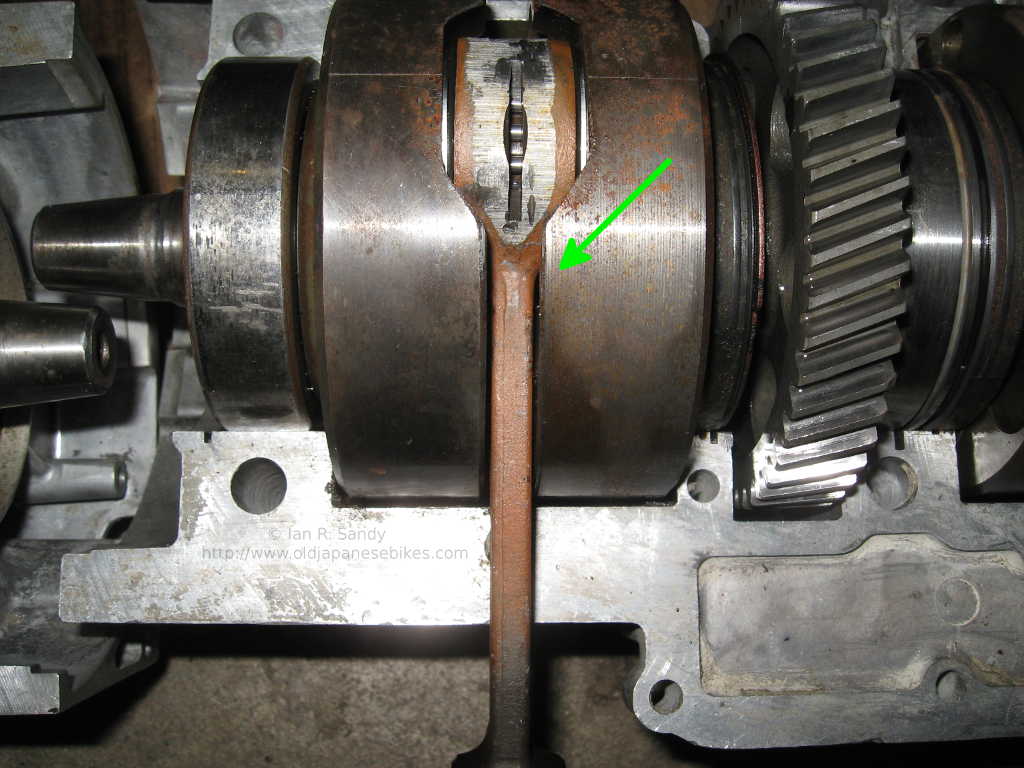
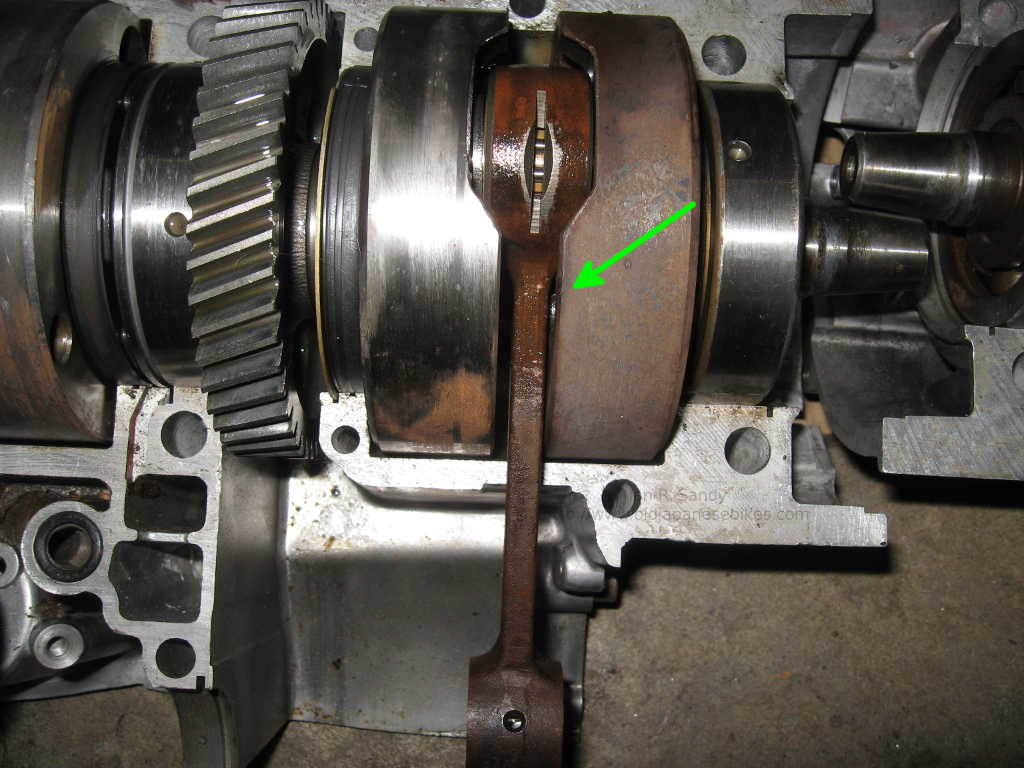
The other change made at engine 38060 was to move to a floating big end - this resulted in the fly wheels being made narrower meaning that older crankshafts are heavier (each new style crank wheel is 1 mm narrower than the old ones). The older style crankshafts weigh 15.1 kg (33.29 lb) and the new style as used on the M, A and B machines weigh 14.7 kg (32.4 lb). The loss of 0.4 kg may partially account for the lower torque in later engines when spinning around at the 4K to 5K RPM typically seen when at highway speeds. You can see the difference in widths clearly in the photos below - just check the gap for the con rods. Old style on the left, and new on the right.
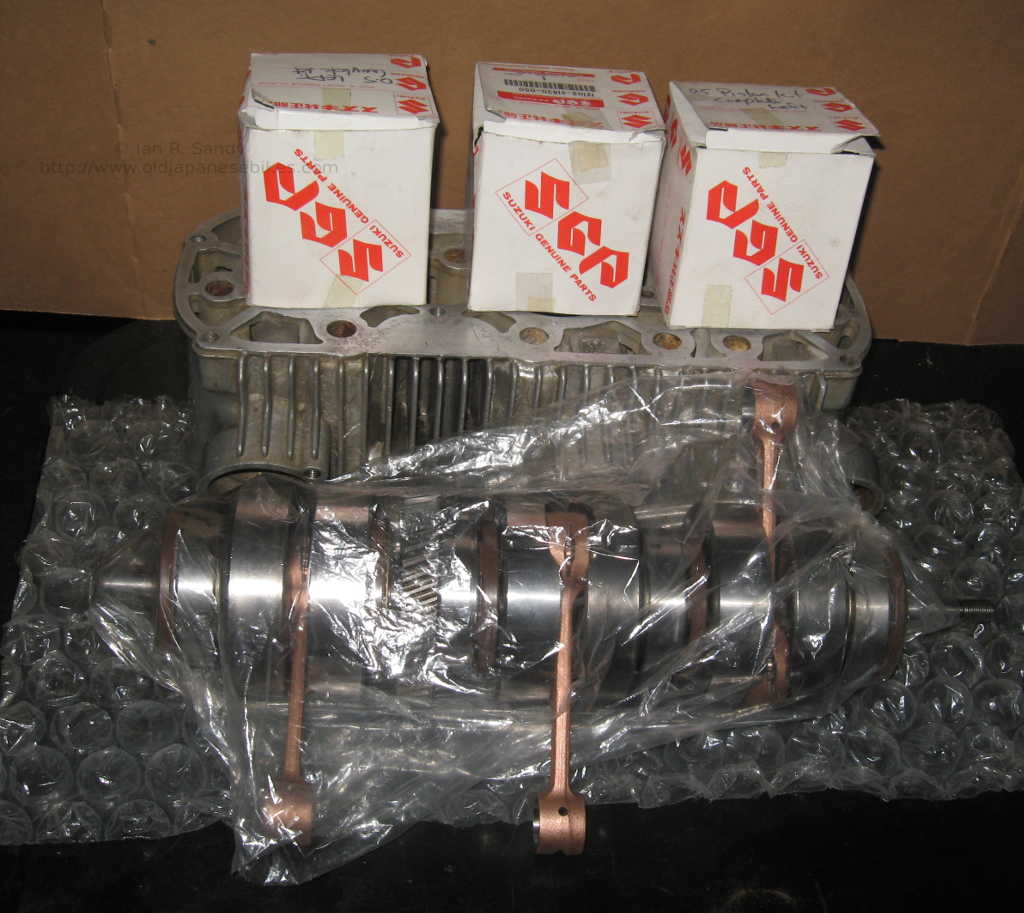
As I had a couple of recently rebuilt late model crankshafts available, I decided not to have the older style one rebuilt. This did mean I had to replace the engine studs to position the barrels (see service bulletin GT-6 at this link), but overall the benefits of the new design I think are worth it.
Elsewhere in the engine is the infamous water bypass line and its ever so narrow sealing flange. This was changed at frame number 36198 when an o-ring was added and the sealing flange widened considerably. With early engines, you just seal them well and hope for the best. In the GT750 Service Manual, Suzuki also recommended adding 'Bar's Leaks' or similar so they recognised they had a problem right from the get-go. The original style crank case is on the left below and the later style on the right. I've shown photos of the upper cases - the lower cases are similar, and of course there is a groove machined in the later style lower case for the o-ring.
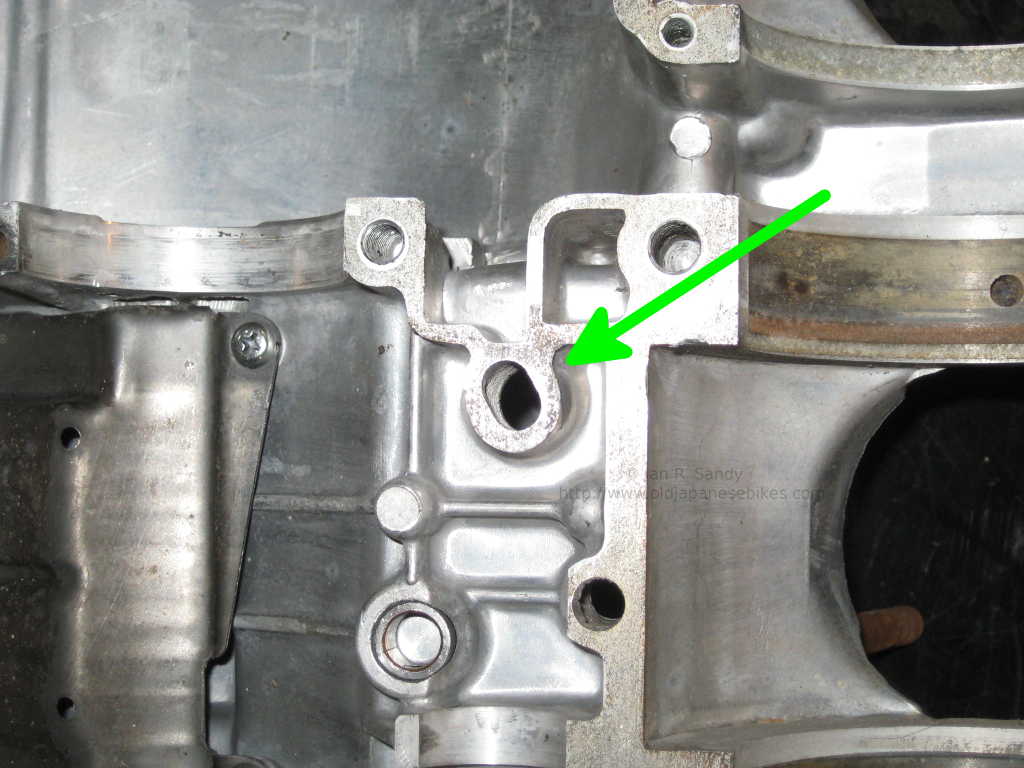
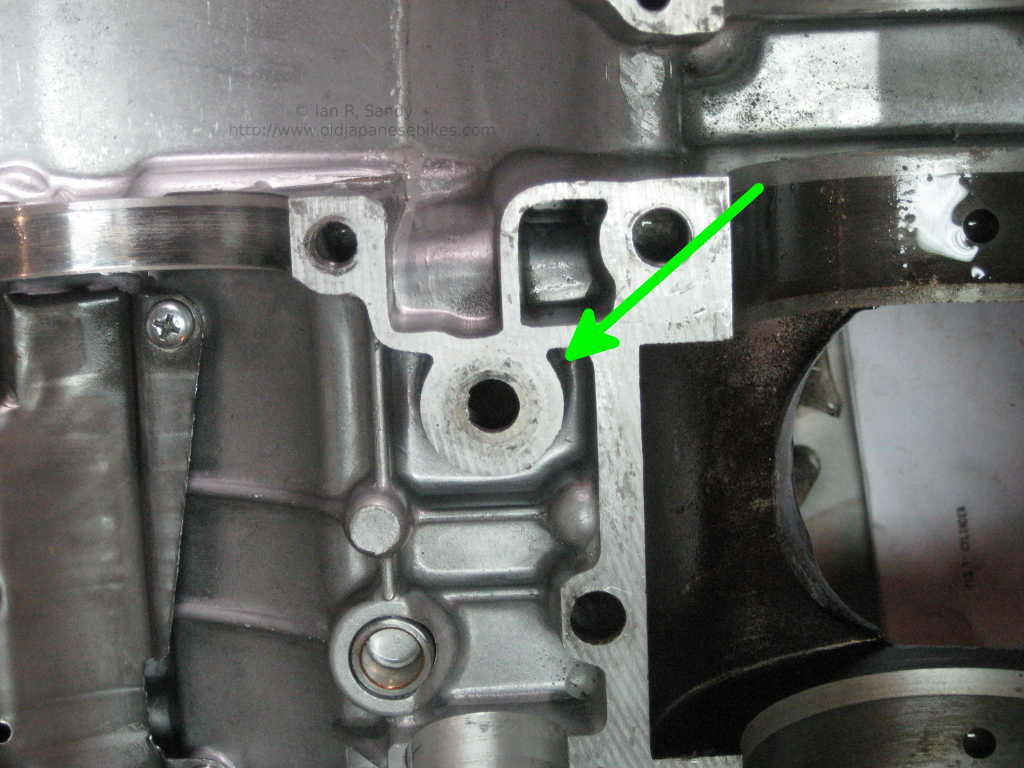
There are other differences on the early engines - prior to frame 18527 for example, there is no oil seal on the right side engine cover for the clutch actuator, and so the cover has slots to allow the gearbox oil to drain back into the gearbox. These can be seen in the photo below on the left. The clutch actuator end covers also went through some changes as seen on the right.
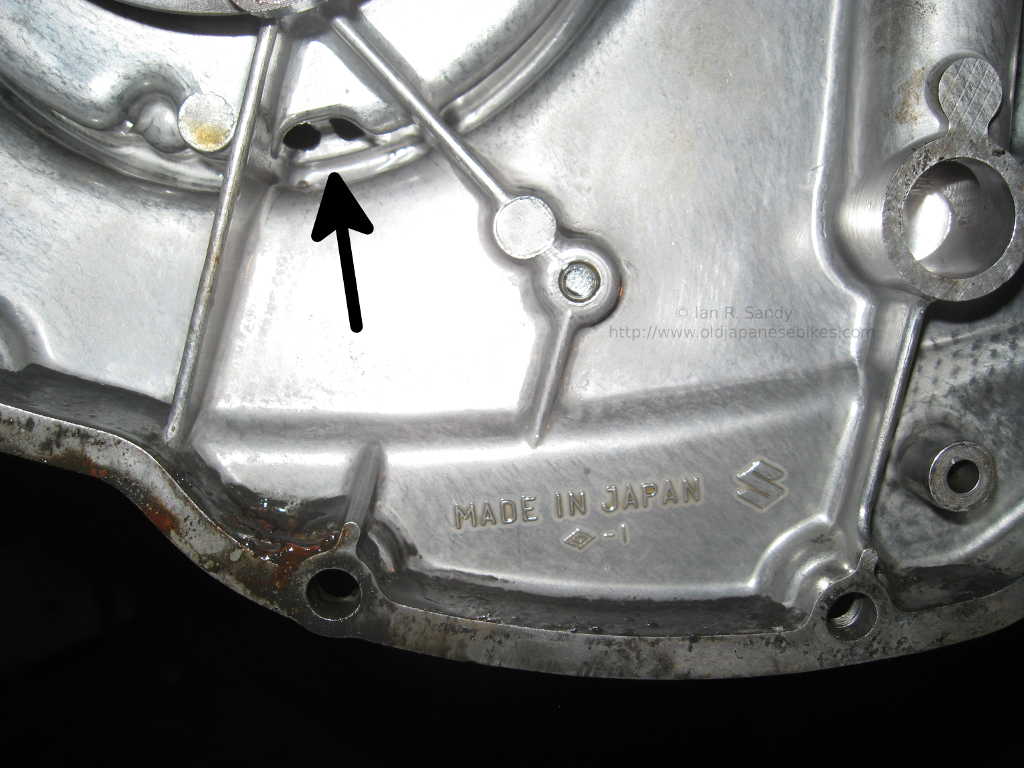
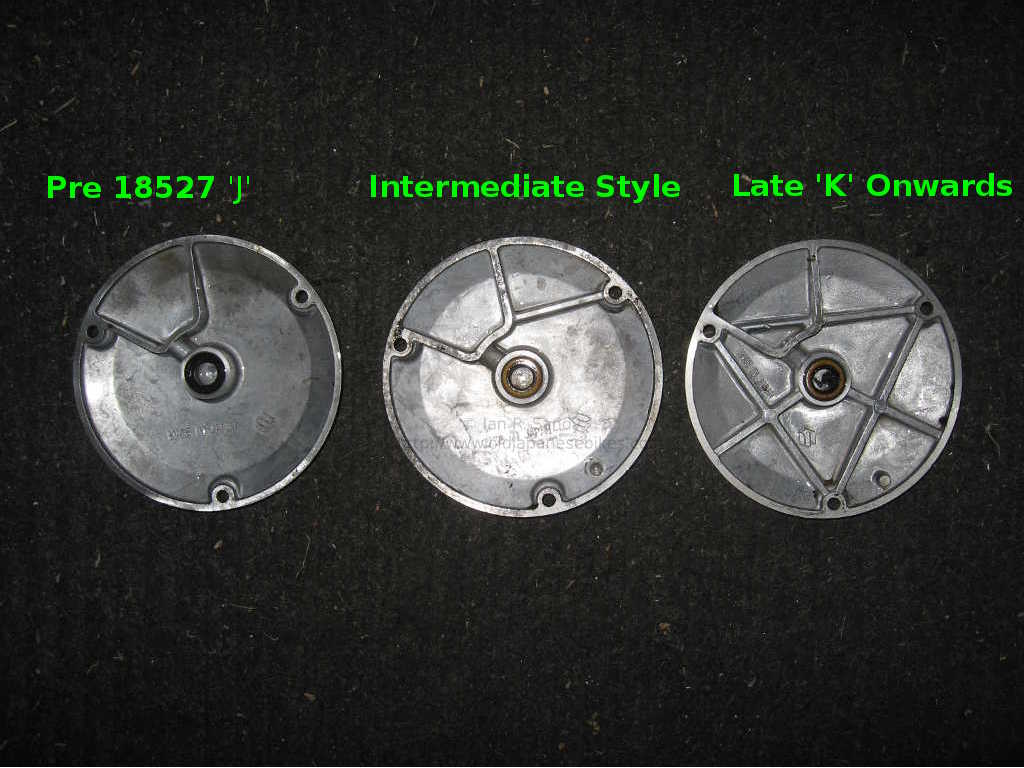
In addition, I updated the main clutch bearing, used the new style of clutch plates, updated the starter clutch bearing and sleeve and rebuilt the oil injection lines, oil pump and water pump. I will cover the oil injection rebuild 'how to' in my blog eventually. The ignition I'm using is an Accent unit from Germany - I've used these quite a few times now and like them.
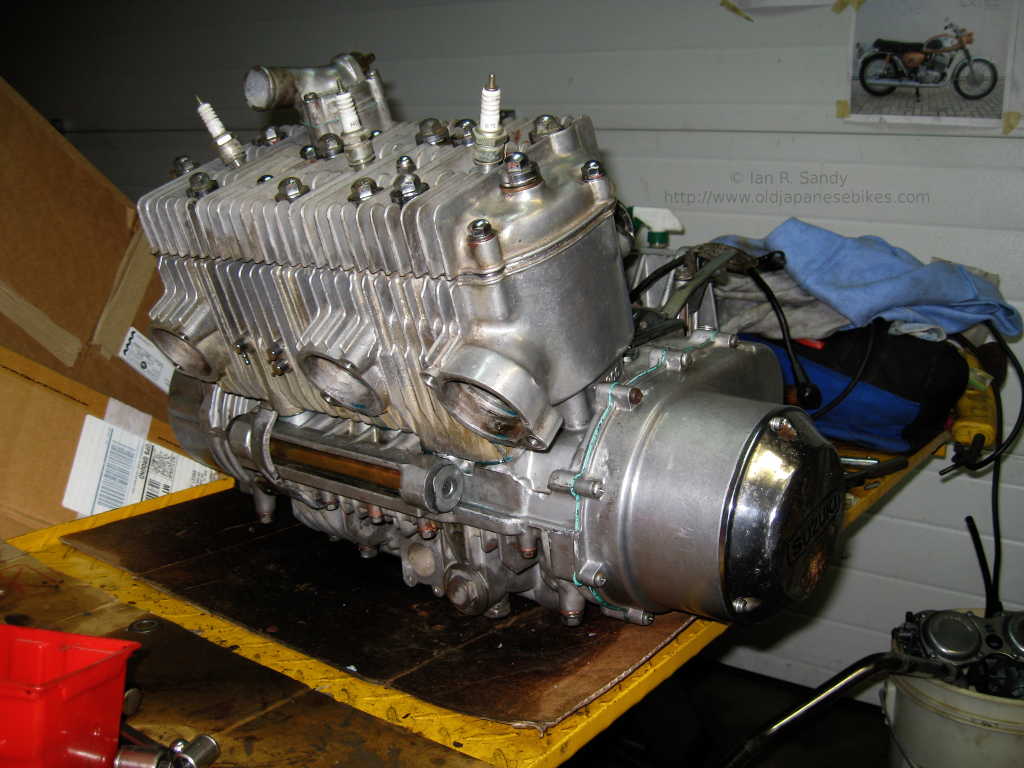
Eventually I got it all bolted together and ready to hang in the frame.
Back to Top